



A desktop and a dream: Closing the digital divide in Pakistan
Digital technology has transformed the ways we live and work, providing new pathways for social and economic opportunity.
But in Pakistan, the gender digital divide is deep – only 26 percent of women have internet access, compared to 47 percent of men.
Women face significant challenges in accessing and utilizing digital technology, such as affordability, lack of education, and sociocultural barriers. This lack of exposure to technology and gap in digital skills mean that women are at risk of being left behind as technology becomes more integrated into daily life and crucial for accessing economic opportunities, education, health care, and social inclusion.
In Gilgit-Baltistan, a mountainous region in northern Pakistan, the tricky terrain and inadequate infrastructure connecting the region to the rest of the country increase these barriers to social and economic opportunities.

Nadia has been interested in technology ever since she was young.
“I remember when I was ten, my family got a desktop computer… Internet was not available at the time, but I used to explore different software,” said Nadia. “That desktop was the biggest motivation for going into computer sciences.”
This turned into a university degree in computer science and a career in the tech industry. Nadia founded Tech Alphalogix with her husband Shaukat, an advertising professional, after they moved from Lahore to Gilgit-Baltistan, where they both struggled to find work in their respective industries.
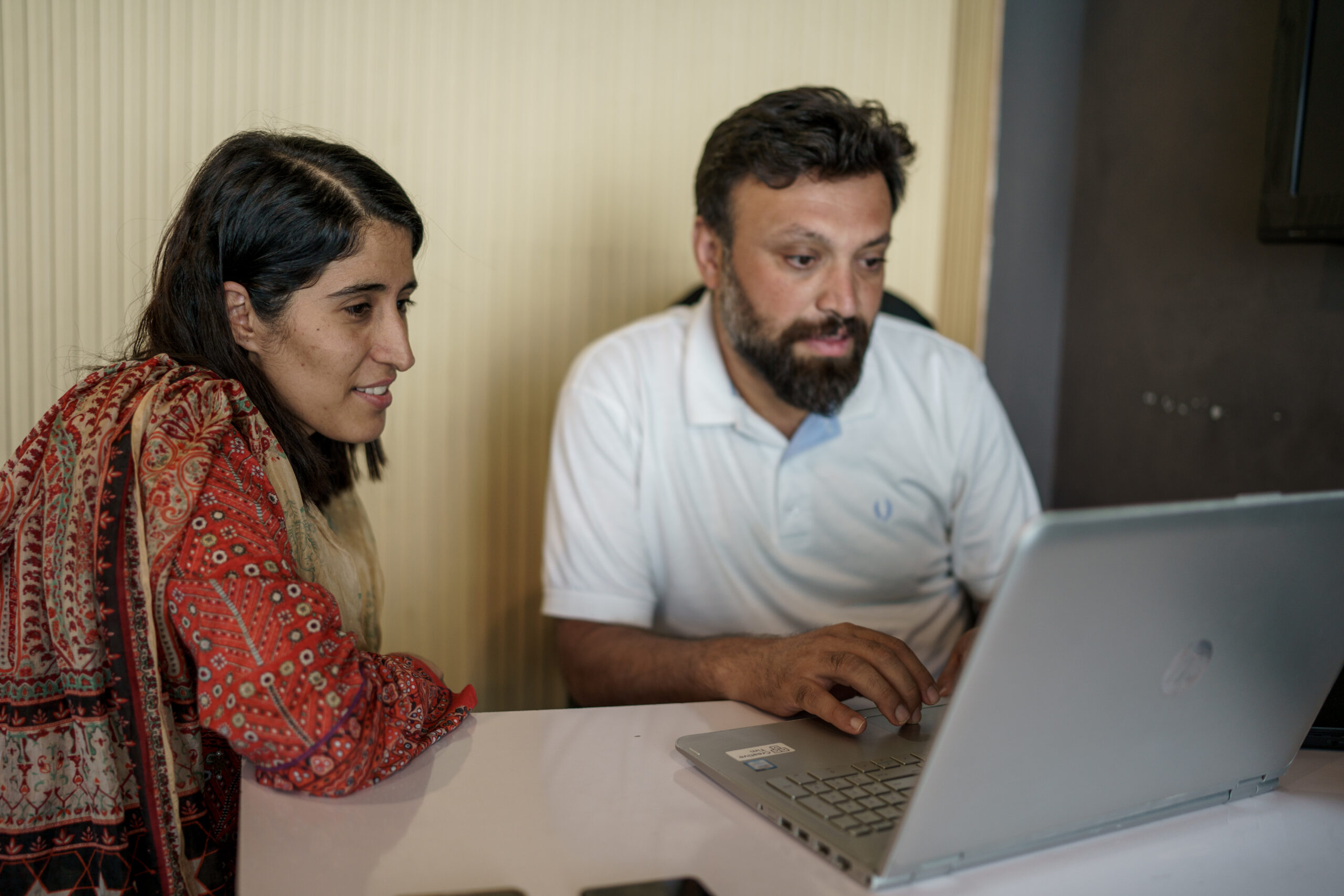
Nadia and Shaukat at Tech Alphalogix.
“I never thought that I’d be doing this type of work,” said Nadia. “I knew I didn’t want a nine-to-five job because I had my two kids at the time… [and] when we moved here, we saw that there were not enough opportunities, particularly in my field. And similarly for my husband, there were not many advertising agencies.”
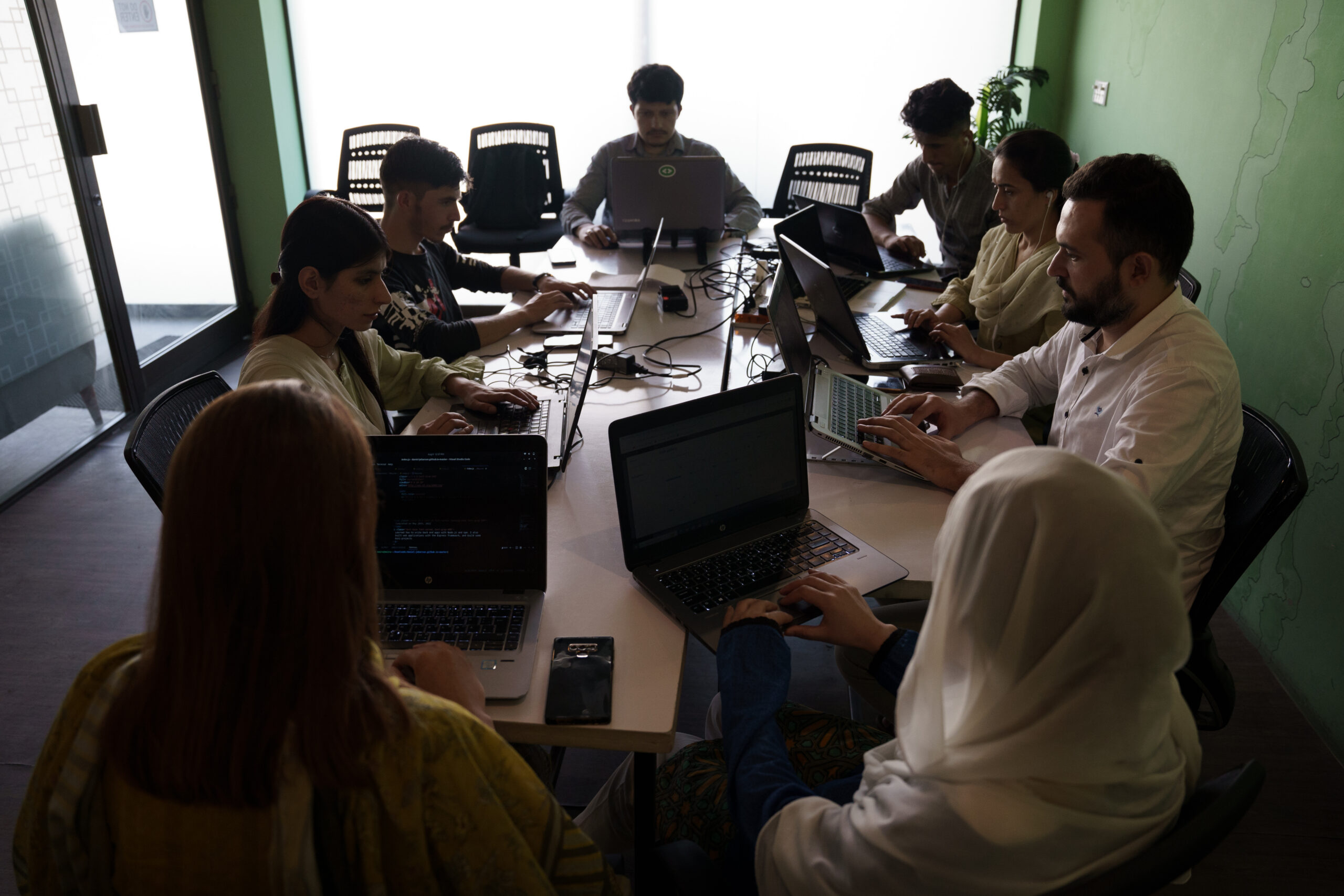
Tech Alphalogix grew from a room in Nadia’s home into a full tech agency, offering web development, mobile development, UX/UI, graphic design, and social media marketing services.
Nadia was approached by the Aga Khan Rural Support Programme (AKRSP), one of AKFC’s partners, to help support training and mentorship opportunities for youth in Gilgit-Baltistan.
In partnership with AKRSP, Accelerate Prosperity, and local organizations in Pakistan, AKFC has worked with over 2,000 businesses like Tech Alphalogix, as part of the Broadening Economic & Social Transformation for Women’s Economic Empowerment & Recovery (BEST4WEER) program, funded by Canada. BEST4WEER aims to improve social and economic development, with a focus on supporting women and helping communities reduce gendered barriers to employment.
Tech Alphalogix’s first cohort had 22 trainees, the majority of whom were women – with Shahzia being one of them.
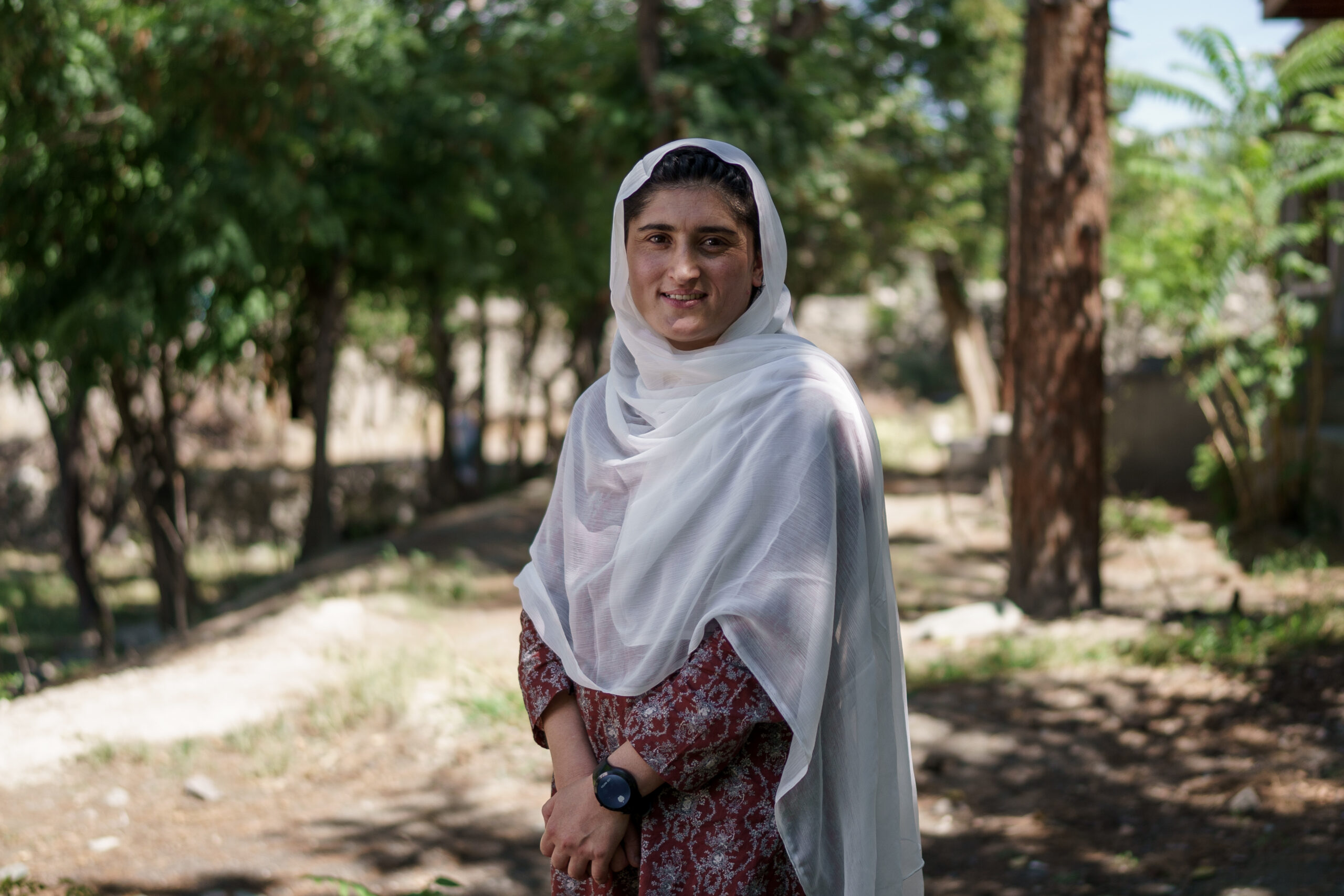
Shahzia was 17 years old when she first saw a computer.
“Before, we didn’t have many opportunities like they have in big cities,” said Shahzia. “I was at home for a long time doing nothing.”
When Shahzia’s brother told her about an apprenticeship program at an IT company in her community, Shazia applied to learn new skills. There, she met Nadia, the CEO and co-founder of Tech Alphalogix.

Shahzia at the Tech Alphalogix office.
“Before joining the training, I lacked direction and didn’t know how to apply my interests in a professional setting,” said Shahzia. “Now, I’ve gained technical skills, built a professional portfolio, and even landed real work opportunities. It has opened doors for me in the tech and data analytics field and given me financial independence and a sense of purpose.”
After completing her training, Shahzia was hired as a full-time employee at Tech Alphalogix, and she now leads the data analyst team.
Nadia is still in contact with many of the former trainees, who — like Shahzia — have built careers in the IT industry. “Two of them have their own startups now, and a few have become independent freelancers,” said Nadia.
The team at Tech Alphalogix.
Nadia continues to build a better future for herself and others through networking, design thinking, and leadership training.
“Women leaders in the industry, they need more opportunities,” said Nadia. “Exposure is very important. If I wasn’t exposed to more opportunities, I wouldn’t know about it. If I have no experience, I wouldn’t know to ask for these opportunities.”
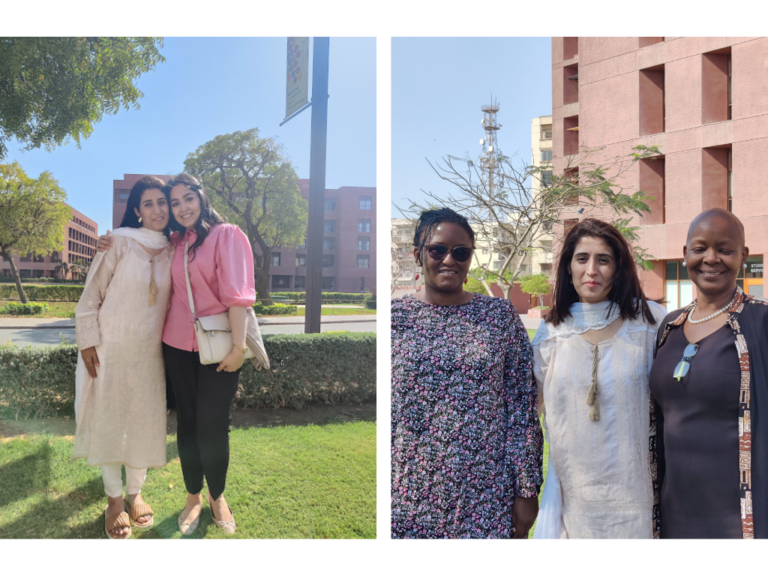
Nadia and her peers at the Women’s Leadership Academy, an initiative supported by Canada.
As a CEO and leader, Nadia has become an inspirational role model for many, paving the way for young women like Shahzia to pursue their dreams.
Nadia has also now expanded her focus from providing training and work opportunities to becoming an advocate for Gilgit-Baltistan’s IT industry.
“I [want] to address the challenges the IT industry is facing right now, particularly the infrastructure issues, skilled force issues, policy, and regulation. Right now, I’m working on bridging the gap between Gilgit and the rest of Pakistan’s IT industry,” said Nadia.
Gilgit’s challenging terrain and limited infrastructure mean that connectivity is not always a given — a major challenge for Gilgit-Baltistan, particularly for the IT industry.
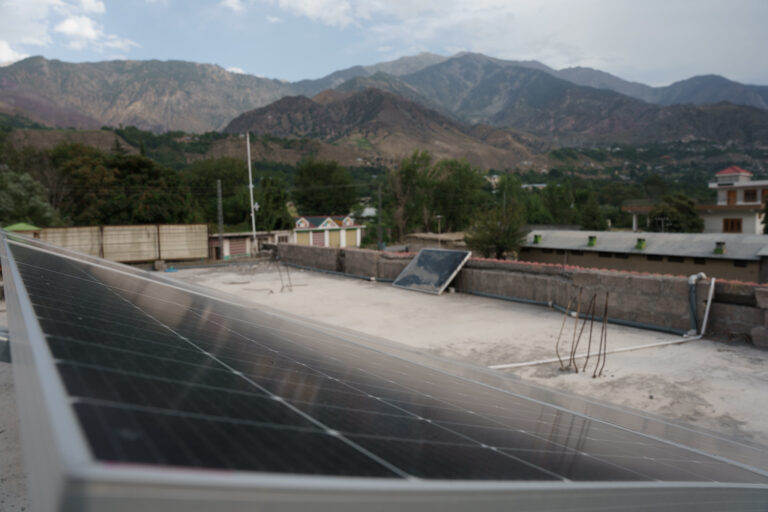
Solar panels installed at the Drosh Institute of Computer & Technical Education, a tech training centre supported by Canada.
“We usually get issues of fibre breaks, and sometimes disconnection, which creates a lot of hurdles. In the winters, sometimes we only get two hours of electricity. This makes it difficult for digital work,” said Nadia.
Nadia is currently working on policies to support investments for companies who want to shift to renewable energy generation to become more self-sufficient and independent from the intermittent power supply. She is also part of many advisory boards and committees working to strengthen Gilgit-Baltistan’s IT industry.
Under BEST4WEER, AKF is also working to establish more IT hubs to support learning and working opportunities, while strengthening the digital infrastructure in the region. The Aga Khan Development Network has also recently partnered with the Pakistan government to develop a new Software Technology Park in Hunza, which will help connect and strengthen the IT infrastructure in Gilgit-Baltistan region, with a focus on connecting rural and remote communities.
“My dream is for Gilgit-Baltistan to become like a Silicon Valley,” said Nadia. “I want Gilgit to be the face of the IT industry in Pakistan. That’s what I’m aiming for.”
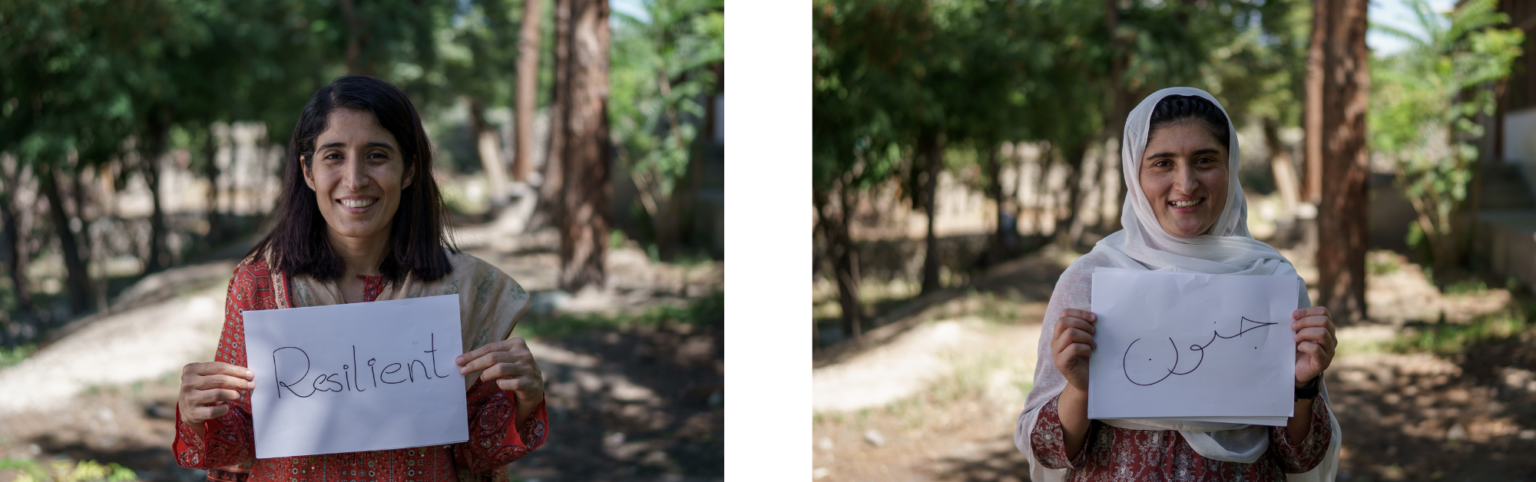
Learn more: Watch a video about Nadia and Shahzia’s story.
Photo credits: Danial Shah / AKFC

Check out these similar resources

The beautiful game: Meet Josephine
On the road to save lives: Mobile health clinics in Mozambique