

ABOUT
THE PROJECT

A Sustainable World is a project of Aga Khan Foundation Canada in partnership with Canadian Geographic, funded by the Government of Canada.

The aim of this project is twofold:
- The interactive map introduces young Canadians aged 12-18 to international development concepts – including the United Nations Sustainable Development Goals (SDGs) – sparks inquiry about and deepens their understanding of world geography, and inspires them to become global citizens.
- Additionally, the project features multimedia resources to better equip educators to introduce and incorporate global citizenship themes in the classroom. The site currently focuses on four major sustainable development themes: education, health, climate and gender. However, more themes may be added in the future.
Suggested User Flow
The project components are mutually reinforcing and can be browsed independently, or with
guidance from an educator as part of a group lesson. For a first visit to the site, we suggest
starting with the brief tour of the features and functions of the interactive map, then diving into
some independent exploration of the map themes and data.
Interactive map
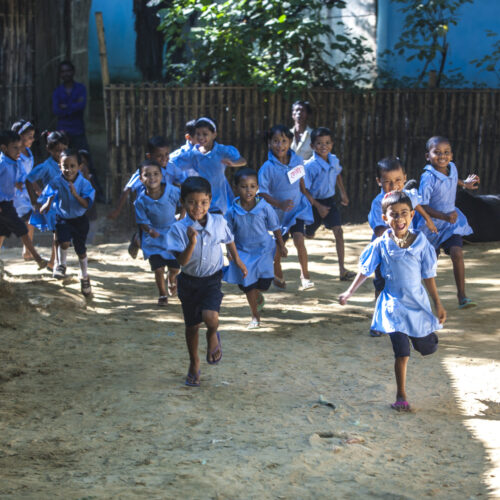
When a user toggles a theme on the left hand side of the map, a legend will pop up from the bottom explaining what data is shown on the map, what the colours and symbols on the map signify, and how the data relate to one or more of the SDGs. Users are encouraged to explore the globe (or toggle a 2D version of the map if desired) and refer to the legend to understand, at a high level, the global picture related to the particular theme. Other themes may be toggled at any time; however, to avoid confusion and keep load times to a minimum, only one theme will appear on the map at a time.
COUNTRY profiles
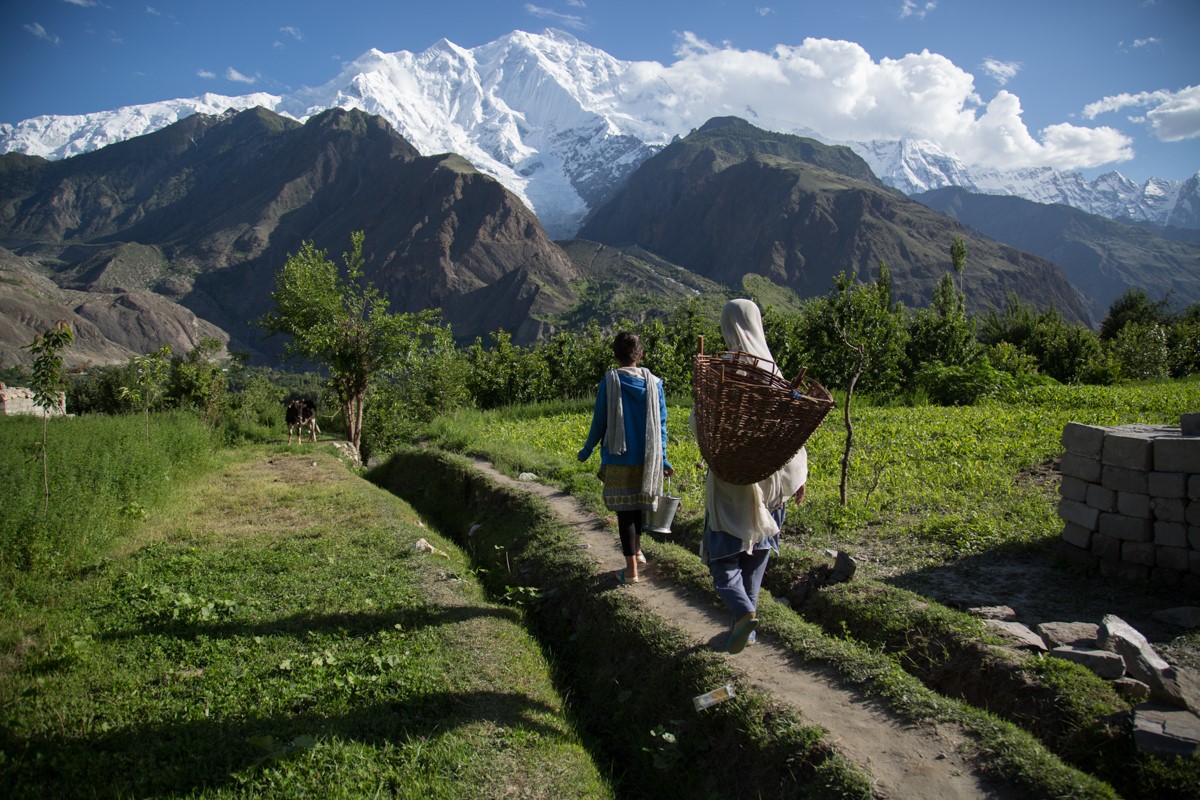
Clicking on a particular country invites deeper exploration of the map themes. When a country is clicked, a chart opens from the left-hand side of the screen containing a basic geographical and human profile of that country, including its land area, population, life expectancy at birth, and GDP per capita. Additional tabs within the chart contain statistics pulled directly from the map (for example, the percentage of the population not using an improved water source or the estimated number of children out of school), as well as additional statistics related to each theme (for example, access to early childhood education in the education tab and energy production from renewable sources in the climate tab).
At the top of the chart, users can also select another country from a dropdown menu to compare with their original choice. The country charts are designed to deepen user awareness of global geography and spark inquiry about other places in the world, what it’s like to live and grow up there, what challenges exist and how they can be addressed.
Learning resources
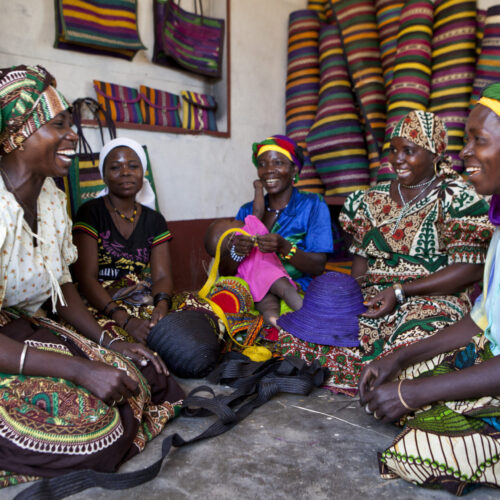
For educators using the site in a classroom setting or looking for guidance on how to introduce and discuss global development themes in an age-appropriate way, the site features videos and case studies from Aga Khan Foundation Canada. These will eventually be accompanied by learning resources developed by Canadian Geographic Education. These resources will support teachers in the use of the map but will also dive deeper on important topics connected to the four broad themes (education, gender, climate, and health). Activities will include components that encourage students to think, reflect, do, and connect, and will conclude with conversation prompts for those wishing to take their learning further. Integrated filters will enable educators to browse resources by type (video, case study, lesson plan, infographic, etc.), by country, by SDG, and/or by theme to find the material that best suits their needs.
Our approach
Why an interactive map?
Interactive maps have become a vital resource in both public and formal education settings. Data visualization helps learners of all ages make sense of complicated data and turn it into useful information, allowing them to easily identify patterns, analyze trends, and keep track of the ways in which the world around them is rapidly changing.
For youth, interactive maps are powerful for several reasons:

Engagement
They make learning more engaging and fun, capturing students’ attention and
encouraging participation and active learning.

Cross-disciplinary learning
Maps provide a visual representation of information, helping students better understand fundamental concepts in geography, history, social studies, and environmental science.
Hands-on experience
Students can explore and manipulate interactive maps, which fosters a deeper understanding through self-guided exploration.
Real world connections
Interactive maps can relate classroom topics to real-world
locations, making learning more relevant and meaningful.

Critical thinking
By analyzing and interpreting map data, students develop critical thinking and problem-solving skills.

Collaboration
Interactive maps often encourage group work and discussion, helping students learn from one another.
About the Data
When selecting data to represent on the map, we were guided by six criteria:
● relevance to the project themes and the UN Sustainable Development Goals
● relevance to the shared global priorities of Aga Khan Foundation Canada and the
Government of Canada
● relevance to/appropriateness for Canadian youth
● degree of completeness
● recency
● update frequency
Health: Share of population not using an improved water source and death rate attributable to unsafe water, sanitation and hygiene (SDG 6)
Education: Children out of school and adult literacy rate (SDG 4)
Climate: Children’s Climate Risk Index (SDGs 11-15)
Gender: Women’s participation in the workforce (SDG 5)
Additional data sources
(country charts)
Area
Wikipedia contributors, “List of countries and dependencies by area,” Wikipedia, The Free Encyclopedia, https://en.wikipedia.org/w/index.php?title=List_of_countries_and_dependencies_by_area&oldid=1346102702 (accessed March 12, 2026).
Population
World Bank, “Population, total,” World Bank Open Data, https://data.worldbank.org/indicator/SP.POP.TOTL (accessed March 30, 2026)
Youth population
World Bank, “Population ages 0-14 (% of total population),” World Bank Open Data, https://data.worldbank.org/indicator/SP.POP.0014.TO.ZS (accessed April 2, 2026)
Urban population
World Bank, “Urban population (% of total population),” World Bank Open Data, https://data.worldbank.org/indicator/SP.URB.TOTL.IN.ZS (accessed March 12, 2026)
Population growth rate
World Bank, “Population growth (annual %),” World Bank Open Data, https://data.worldbank.org/indicator/SP.POP.GROW (accessed March 12, 2026)
Life expectancy at birth
World Bank, “Life expectancy at birth, total (years),” World Bank Open Data, https://data.worldbank.org/indicator/SP.DYN.LE00.IN (accessed March 12, 2026)
GDP per capita
World Bank, “GDP per capita (current US$),” World Bank Open Data, https://data.worldbank.org/indicator/NY.GDP.PCAP.CD (accessed March 12, 2026)
Medical doctors per 1,000 people
Global Health Workforce Statistics, WHO, via World Bank (2026), processed by Our World in Data, “Medical doctors per 1,000 people, 2023,” Our World in Data, https://ourworldindata.org/grapher/physicians-per-1000-people (accessed April 7, 2026)
Share of population with mental health disorders
IHME, Global Burden of Disease (2025) – with major processing by Our World in Data, “Share of population with mental health disorders – IHME” [dataset]. IHME, Global Burden of Disease, “Global Burden of Disease – Prevalence and Incidence” [original data], https://archive.ourworldindata.org/20260319-181852/grapher/share-with-mental-and-substance-disorders.html (accessed April 7, 2026)
Countries with a stand-alone policy or plan for mental health
World Health Organization – Global Health Observatory (2025) – processed by Our World in Data, “Stand-alone policy or plan for mental health” [dataset]. World Health Organization, “Global Health Observatory” [original data], https://archive.ourworldindata.org/20260304-094028/grapher/stand-alone-policy-or-plan-for-mental-health.html (accessed April 7, 2026)
Children’s Climate Risk Index
UNICEF, “The Children’s Climate Risk Index Interactive Atlas (beta version, Aug 2021),” https://experience.arcgis.com/experience/0d9d2209bf104584a65e012b03b6d3f8/ (accessed March 12, 2026)
Electricity production from renewable sources
Our World in Data, “Data Page: Share of electricity generated by renewables,” part of the following publication: Hannah Ritchie, Pablo Rosado, and Max Roser (2023) – “Energy.” Data adapted from Ember, Energy Institute, https://archive.ourworldindata.org/20260304-094028/grapher/share-electricity-renewables.html, (archived on March 4, 2026, accessed April 7, 2026)
Access to electricity
Data compiled from multiple sources by World Bank – with minor processing by Our World in Data, “Share of the population with access to electricity – World Bank” [dataset]. SDG 7.1.1 Electrification Dataset, World Bank, via World Bank, “World Development Indicators 125” [original data], https://archive.ourworldindata.org/20260304-094028/grapher/share-of-the-population-with-access-to-electricity.html (archived on March 4, 2026, accessed April 7, 2026)
Days of temperatures above the 90th percentile
Giguere, Joseph/Climate Central, “Climate Change and the Escalation of Global Extreme Heat: Assessing and Addressing the Risks” [dataset], Climate Change and the Escalation of Global Extreme Heat Report, https://www.climatecentral.org/report/climate-change-and-the-escalation-of-global-extreme-heat-2025 (archived May 29, 2025, accessed February 27, 2026)
Participation in preprimary education
UNESCO Institute for Statistics Education Survey (extracted on October 1, 2025), “Participation rate in organized learning (one year before the official primary entry age), by sex (%),” UIS database, https://www.uis.unesco.org/en/data (accessed February 27, 2026)
Girls completing upper secondary school
Our World in Data, “Data Page: Share of girls that have completed upper secondary school,” part of the following publication: Hannah Ritchie, Veronika Samborska, Esteban Ortiz-Ospina, and Max Roser (2023) – “Global Education”. Data adapted from UNESCO Institute for Statistics, https://archive.ourworldindata.org/20260304-094028/grapher/school-completion.html [online resource] (archived on March 4, 2026, accessed March 12, 2026)
Share of women in parliament
V-Dem (2026) – processed by Our World in Data, “Share of women in parliament – V-Dem” [dataset], V-Dem, “Democracy report v16” [original data], https://archive.ourworldindata.org/20260402-164039/grapher/share-of-women-in-parliament.html (archived on April 2, 2026, accessed April 7, 2026)
Acknowledgements
Project lead: Natasha Asbury
Developers: Anne Clifford, Tim Clifford
Designer: Greg Dubeau
Cartographer: Chris Brackley
Editorial lead: Alexandra Pope
Education leads: Sophia Mirzayee, John Estabillo
Content Reviewers: Annie Lee, Christine McGuire, Rosemary Quipp
Aga Khan Foundation Canada and Canadian Geographic gratefully acknowledge the many people who contributed their time and insight to this project, including Sara Black, Michelle Chaput, James Ivison, Jenny MacPhee, Rithika Shenoy, Mitchell Taylor, Aaniqa Karmali, Aarishi Ali, Aly Rajab, Amna Khan, Ava Alibhai, Ella Cusack, Gagan Sahota, Malika Yoh, Michelle Onyebuchi, Mishika Khurana, Muzhda Akbari, Peter Huseynzade, Sameer Somani, Sydney Sinclair, and Ziya Bhayani.